For some people, it could be a boring, highly technical topic. For indeed, “Watershed management “is not as glamorous as saving forests, or saving a rare native bird!
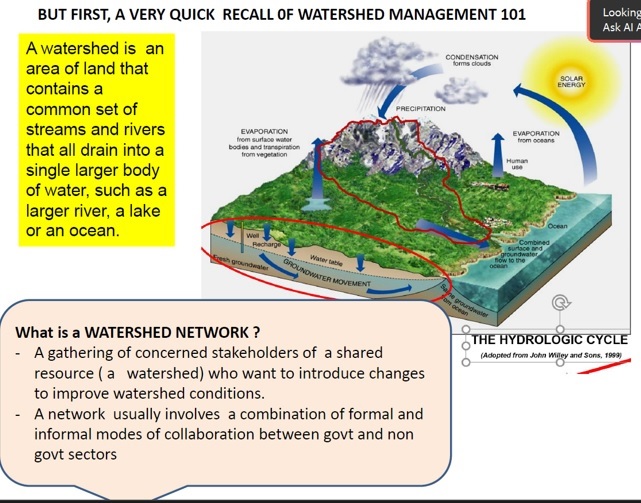
Imagine looking at the Philippine lands from the sky. The Philippine land area is actually composed of a mosaic of thousands of catchments or watersheds. Each watershed contains mountains and valleys that “catches” the rainwater and drains or “sheds “the same into a river”.
Each Filipino lives in a watershed and has a watershed address. You live in one watershed while a friend would live in another watershed. In one watershed there could be forest dwellers, farmers, businessmen, city residents, fishermen, students etc. all living there.
The biophysical health of Watersheds can influence the behavior of droughts, landslides and floods. Because of the impact of climate change, we are naturally drawn to the topic of “watershed management”. Mother nature, teaches us about the “Water Cycle,” We are to manage the land in such a way to direct the flow of all rain catches in in a watershed, store the same into the ground or in ponds and lakes. This is to minimize droughts in summer, and landslides and floods in the rainy season.
In the ideal world, everybody obeys nature’s rule on the water cycle. In the real world only, a few do so. Watershed management then is really about people management, more than anything else! It has been part of my destiny to work around watershed and people issues since the 80s (and running).
Notwithstanding the ups and downs of watershed advocacy, I continue to be naively(?) enthralled by the idea of people thinking as citizens, and working together with government to save their watersheds, and eventually themselves. In the process, helping enliven democratic governance and livelihoods in our country, watershed by watershed.
Ideas that inspired us
- Under the climate change emergency, the role of watershed health is considered very vital to help us adapt to climate change.
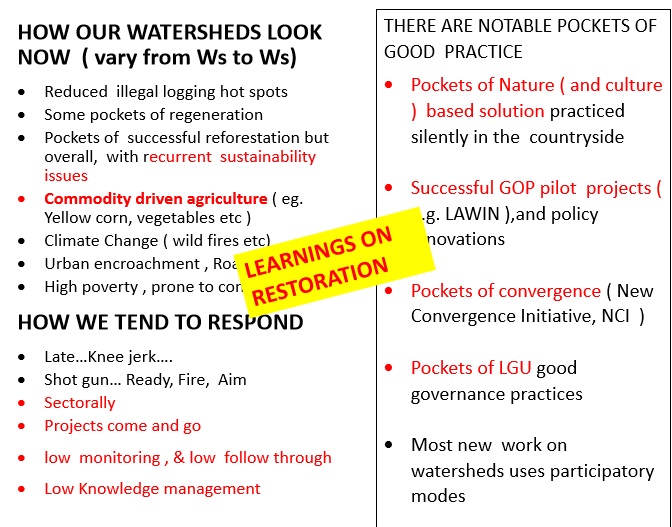
- Philippine laws have declared many watersheds reserve (for ecological service like water supply.) However, in such watersheds, there are actually many competing land use interests of many stakeholders: (forest users, farmers, urban households). This phenomenon, combined with lack of government resources/presence to enforce the law, often result into degradation of many watershed reserves.
- In a number of watershed specific cases, local stakeholders are organized. Subsequently; able to overcome the state of conflict in watersheds and forge a consensus anyone different stakeholders.
Remarkable communities and local watershed networks
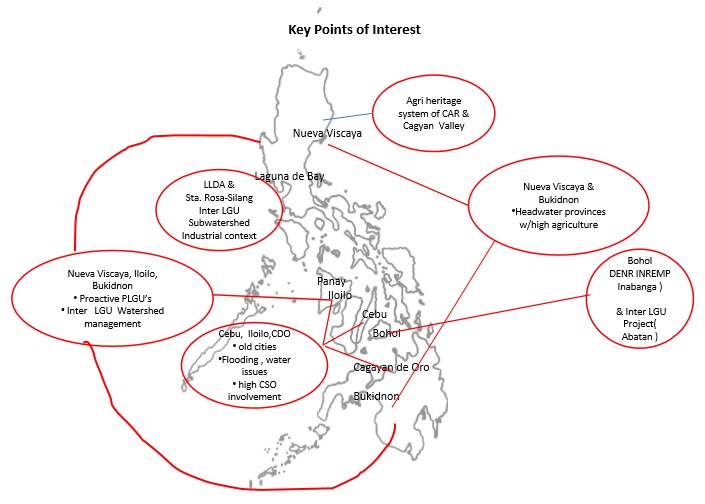
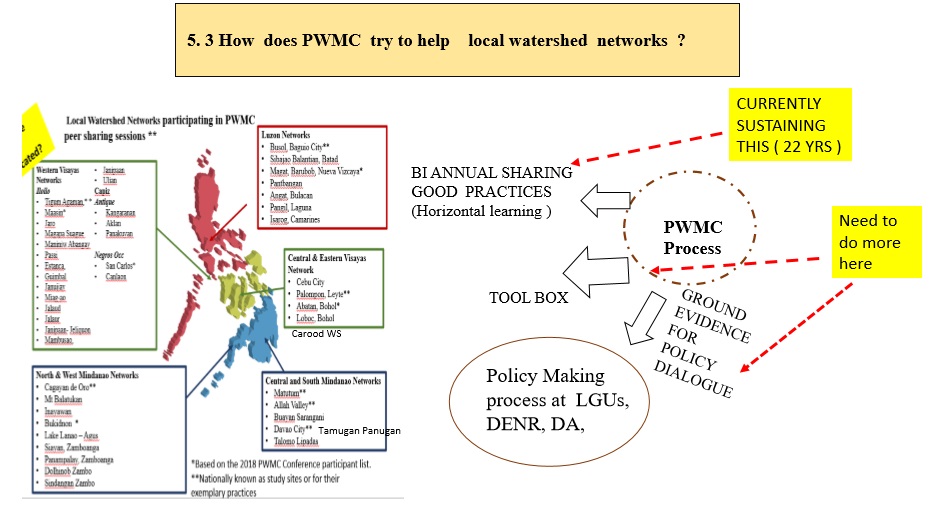
Citizen movements combined with local government leadership in the following sample cases: Iloilo City, Cebu City, Cagayan de Oro, Sierra Madre Range, Sta. Rosa Laguna, Palompon, Leyte. San Carlos City, Negros Occidental. Bukidnon, Davao City.
Catalytic projects that helped model the way
- The DENR, Ford Foundation and Asian Institute of Management (AIM).
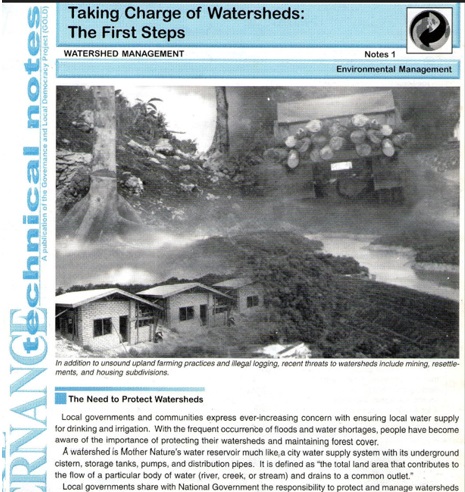
- The USAID –The Governance and Local Democracy or GOLD project of the 90s helped over 30 LGUs provincial and their partner citizen groups together with the DENR, launch local watershed action programs.
- The USAID Ecological Governance project in the 2000 supported more in-depth capacity building of LGU civil servants on local watershed programs.
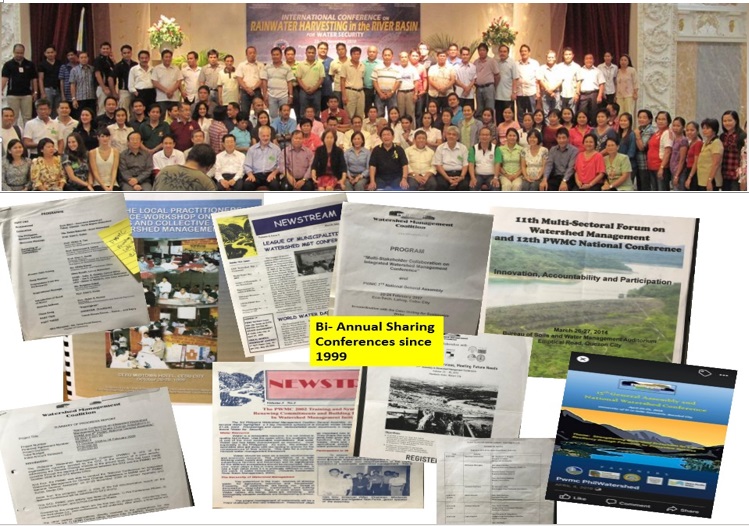
- The Philippine watershed Management Coalition (PWMC) launched in 1999, is the country’s largest and only national network of local watershed networks. PWMC draws like-minded advocates into its biannual national sharing conferences.
Key Features
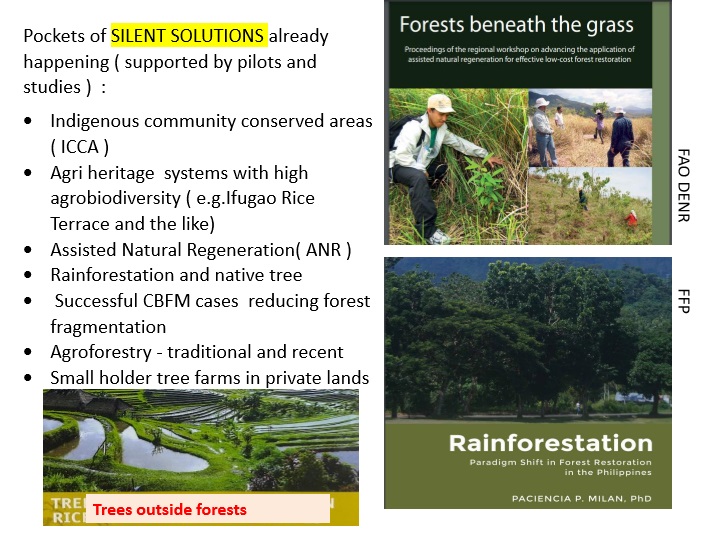
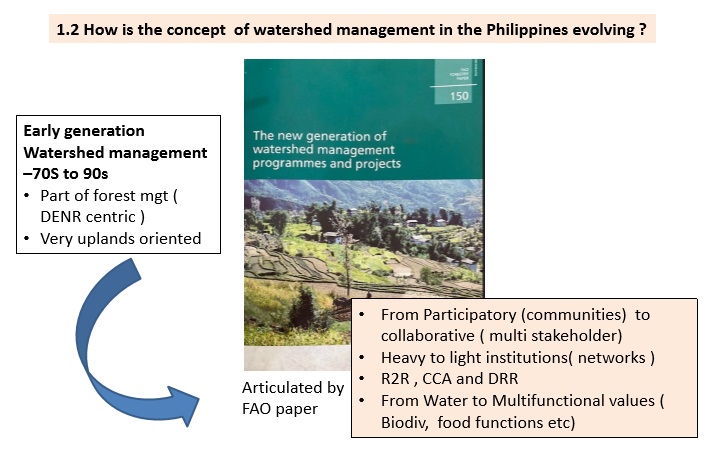
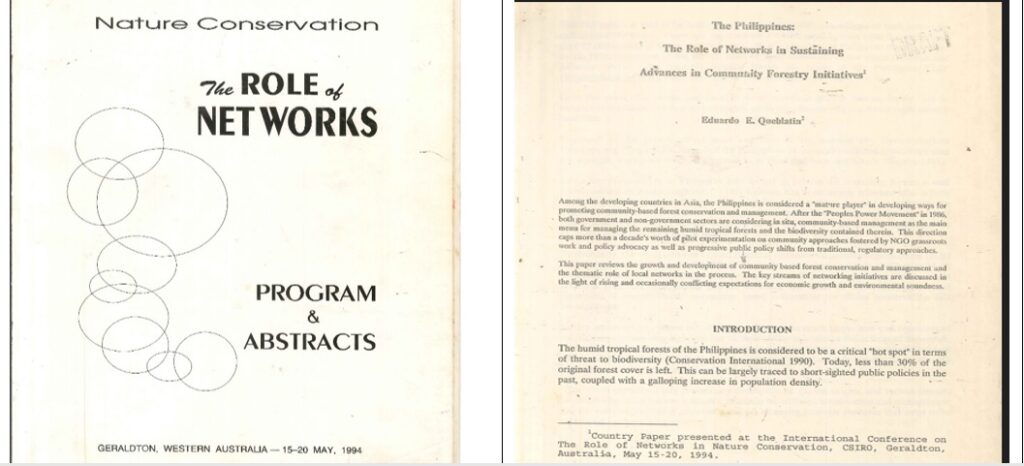
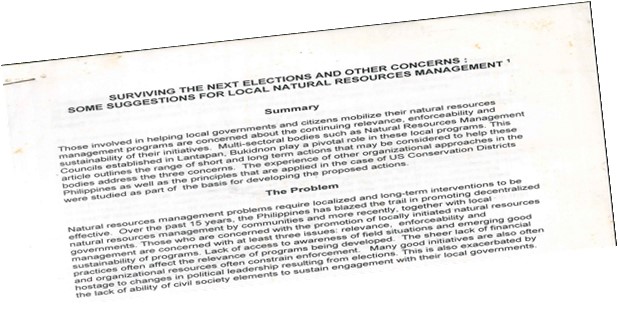
Mentors and Co-travelers
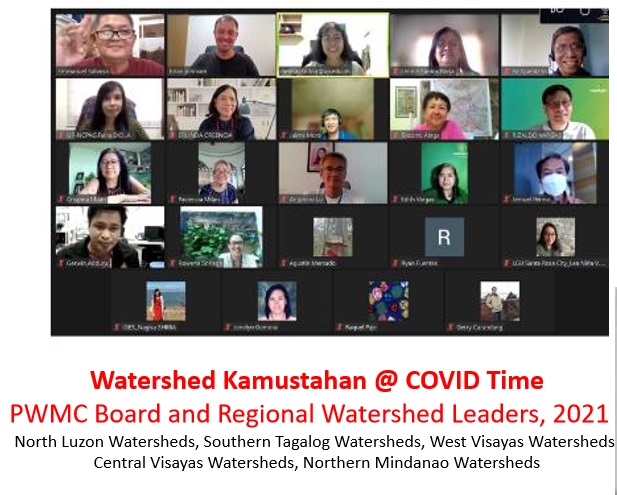
Jessica Salas is referred to as the “mother” of PWMC, we salute her Years of indefatigable service based on her deep grounding with the watershed effort in Iloilo Her book “Watershed Walk “is a prominent feature in my small library… Jemuel Perino has set the bar of service for watershed facilitation in Mindanao Rex Cruz of UPLB has helped shape the relevance of R& D to practical watershed concerns.
Way Forward
The challenges (below) have sort of defined the contours of our personal (if not naively stubborn?) advocacy efforts through the years.
- The total number of active work (likely less than 100 watersheds) still pales in comparison to the scale of work needed (i.e., thousands of watersheds to be put under better management.
- There is lack of policy-based incentives to protect forests and more incentive to do non-forest land use like agriculture, or subdivisions.
- DENR needs to work on those forest disincentives. The UN now calls for a more inclusive approach such as Forest Landscape Restoration or FLR that covers local solutions to degradation. This can supplement or replace conventional “reforestation “programs. But FLR is not yet within the comfort level of government technical planners. There is some initial action but the pace is not enough
- Provincial Governments, might be more immediately open to the concept of the FLR! The Philippine League of ENROs can help catalyze the process. But capacity building is very much needed yet.
- Half of the policy reforms to protect watersheds need to come from the Department of Agriculture (DA)! The DA needs to act on the obvious spill over of its intensive commodity programs into fragile hilly lands of watersheds. We intentioned Agricultural subsidies has environmental footprints on our land and water.
- Local Watershed networks can help accelerate local reforms to support watersheds. It is however a long-term journey! with many ups and downs. Champions need to be developed from generation to generation to keep the process alive.
- Other concerns are aging leaders, Advocacy fatigue, lack of better messaging (?) and lack of 2nd generation champions to carry on the facilitating work.
- A key challenge of our advocacy now is lack of long-term funding for advocacy work. Much time is spent for looking for funding. Capacity building type of support for watershed networks do not attract ready funding compared to direct, support to grassroots action for climate change of biodiversity.
Leave a reply